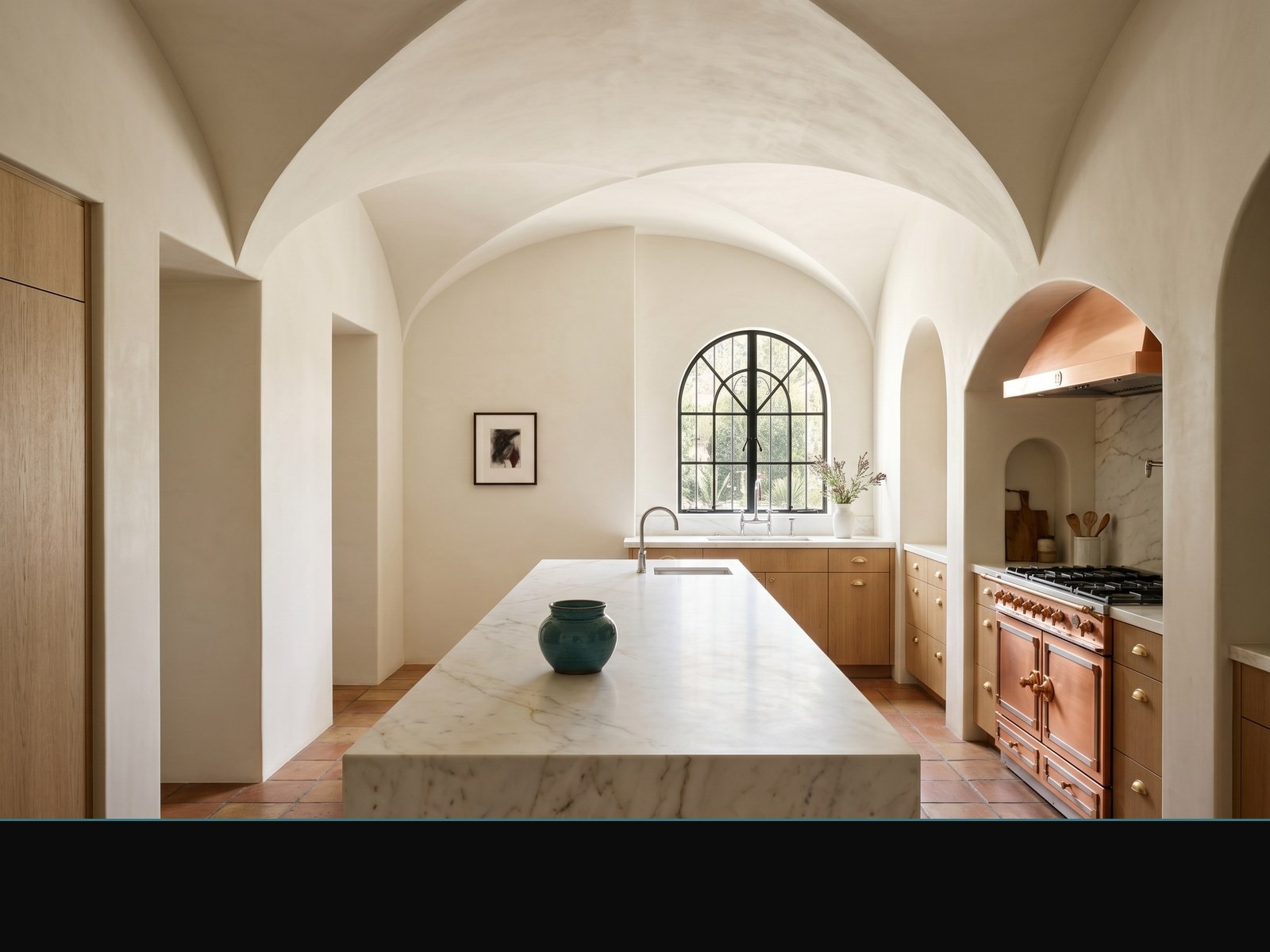
The Brentwood Light Study
Renovation
Mid-Century Ranch
Kickoff to Move-In
All-In
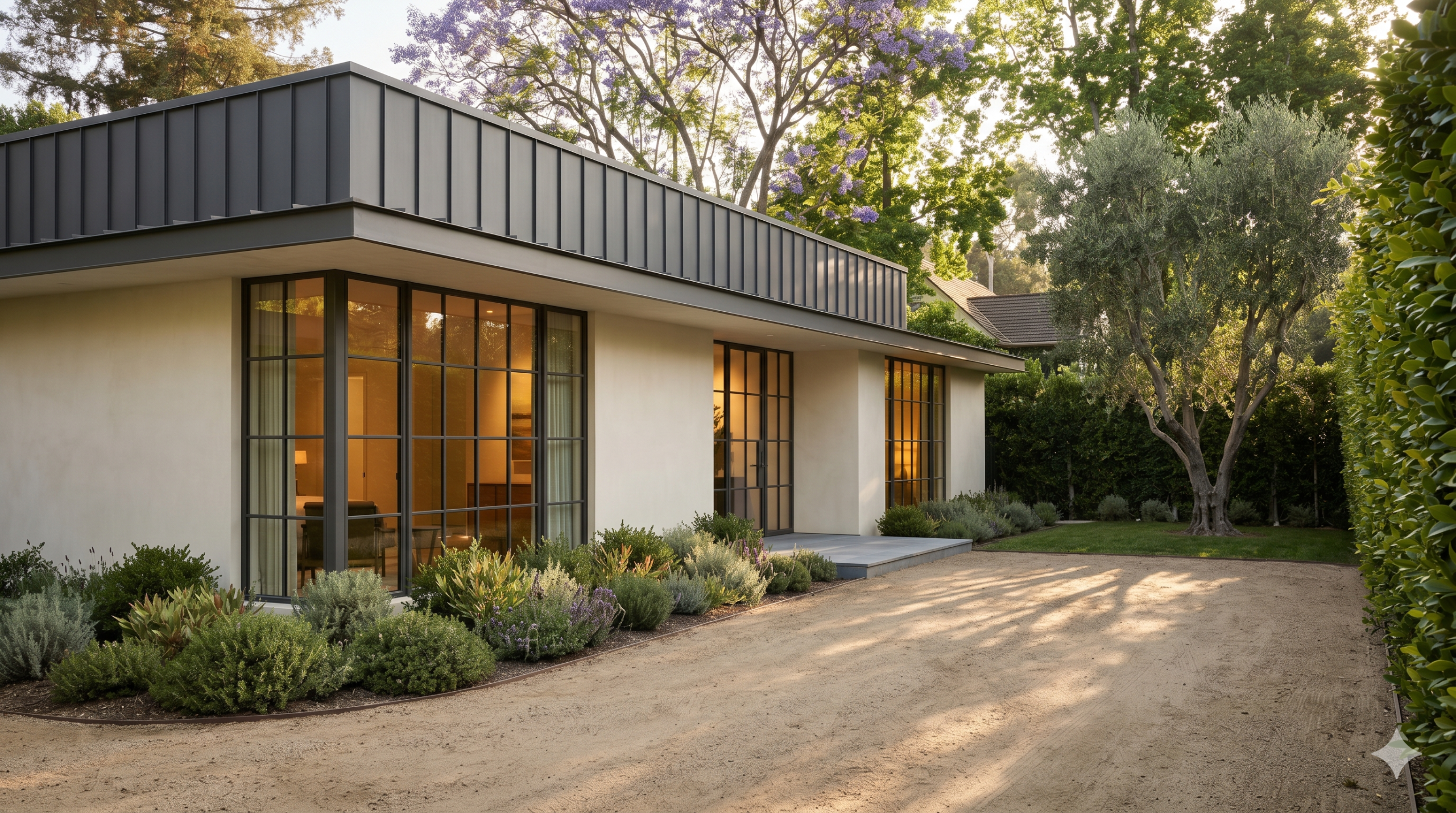
A 1968 ranch, returned to canyon light
The home had been remodeled three times across five decades — each renovation adding a wall, a soffit, or a partition where the original mid-century plan had wanted none. By 2024, the canyon at the back of the lot was visible only from one window in the kitchen. The homeowners — a screenwriter and a landscape architect with three children — came to WDC with one operating principle: take down the additions, restore the original spatial reading, and let the canyon back into the house. Not a restoration project, but a clarification.
The house had been remodeled three times and each time it lost more light. The work wasn’t to remodel a fourth time. It was to undo what didn’t belong, and then let the original architecture do its job.— On The Brentwood Light Study
Subtract first, then refine
The design moved in two phases. First, removal of the accretions: a 1990s kitchen wall that closed the rear elevation, a 1980s den partition, a dropped soffit, and two non-load-bearing walls between the entry and the dining room. Then, a precise set of additions calibrated to the original 1968 vocabulary.
01 · Structural Reorganization
A single 32-foot engineered beam replaced the rear-elevation wall, opening the kitchen, dining, and living rooms to a continuous reading across the canyon side. Two additional micro-beams cleared the entry sequence. The original roof plane was preserved; the framing was rebuilt around it.
02 · Full-Height Glazing
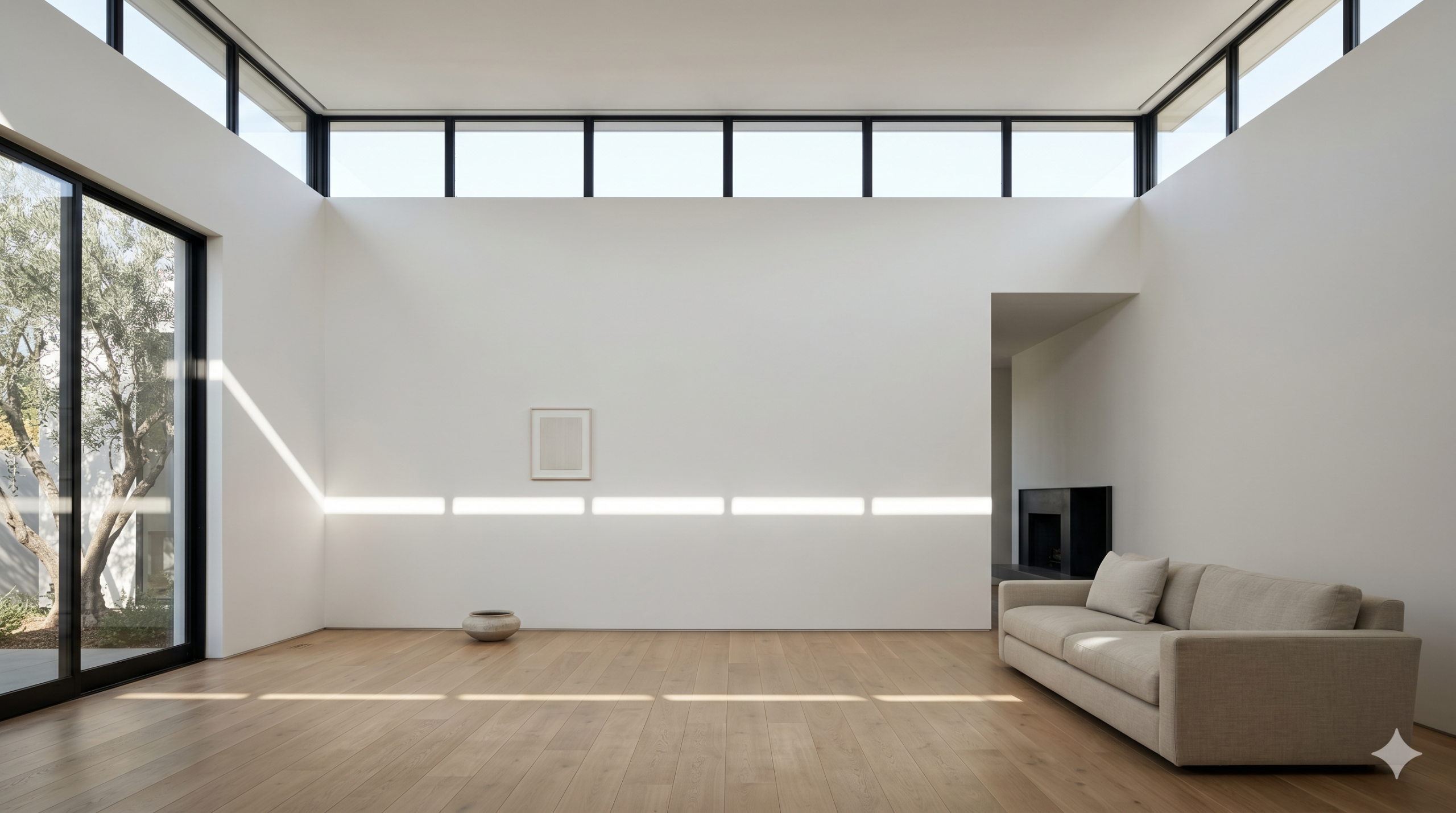
The 32-foot rear opening was glazed with thermal-broken steel-framed sliding doors — a Fleetwood Series 3070 system with a 10-foot center pocket. The glazing reaches floor to ceiling. The eye reads canyon, not frame.
03 · Material Restraint
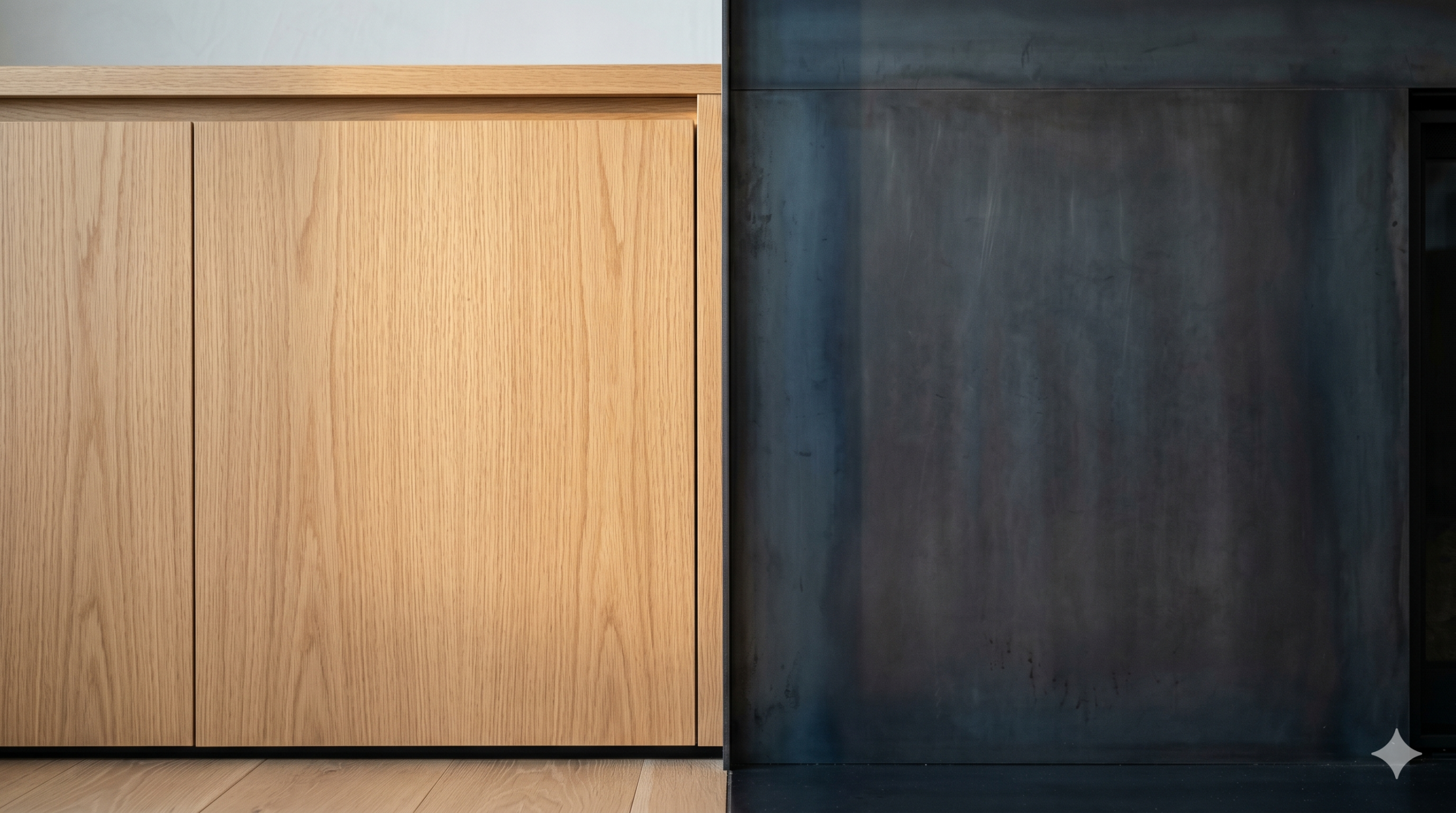
Two primary materials throughout the public rooms: rift-sawn white oak for cabinetry, ceilings, and stair treads; board-formed concrete for the fireplace mass and the kitchen island base. Plaster walls, no paint changes between rooms. Floor: single material from front door to canyon — wide-plank European white oak.
04 · Canyon Restoration
The rear yard was simplified: stone terrace replaced lawn, native planting replaced ornamentals, the original pool was preserved but reshaped to a quieter geometry. The landscape architect-owner specified planting. WDC executed hardscape and the connection grading from house to terrace.
The 32-foot beam was the entire project, structurally and architecturally. Everything else was a detail in service of it.— Jacob Bachar, WDC
The material palette
Floor
Wide-plank European white oak · single material throughout
Walls
Smooth-troweled plaster · no paint transitions · matte finish
Cabinetry
Rift-sawn white oak · finger-pull · soft-close
Stone
Board-formed concrete · honed Calacatta island
Glazing
Fleetwood 3070 thermal-broken steel · 32-foot opening
Outdoor
Stone terrace · native planting · reshaped pool
Eleven months, end to end
+ Geotech
+ Engineering
+ Bidding
Demo to Punch
+ Move-In
Trades + collaborators
Design-Build Lead
We Do Construction · Jacob Bachar
Architectural Authorship
In-house · WDC Studio
Structural Engineering
Local structural · 32-ft engineered beam + lateral system
Landscape
Owner-led · landscape architect
Millwork
Southern California millwork shop · rift white oak
Glazing
Fleetwood Windows + Doors · Series 3070
Frequently asked questions
How did you remove a 32-foot load-bearing wall?
Did the family stay in the home during construction?
Why a single material for cabinetry and ceilings?
What did the glazing system cost?
Could the original pool have been removed?
Related Projects + Reading