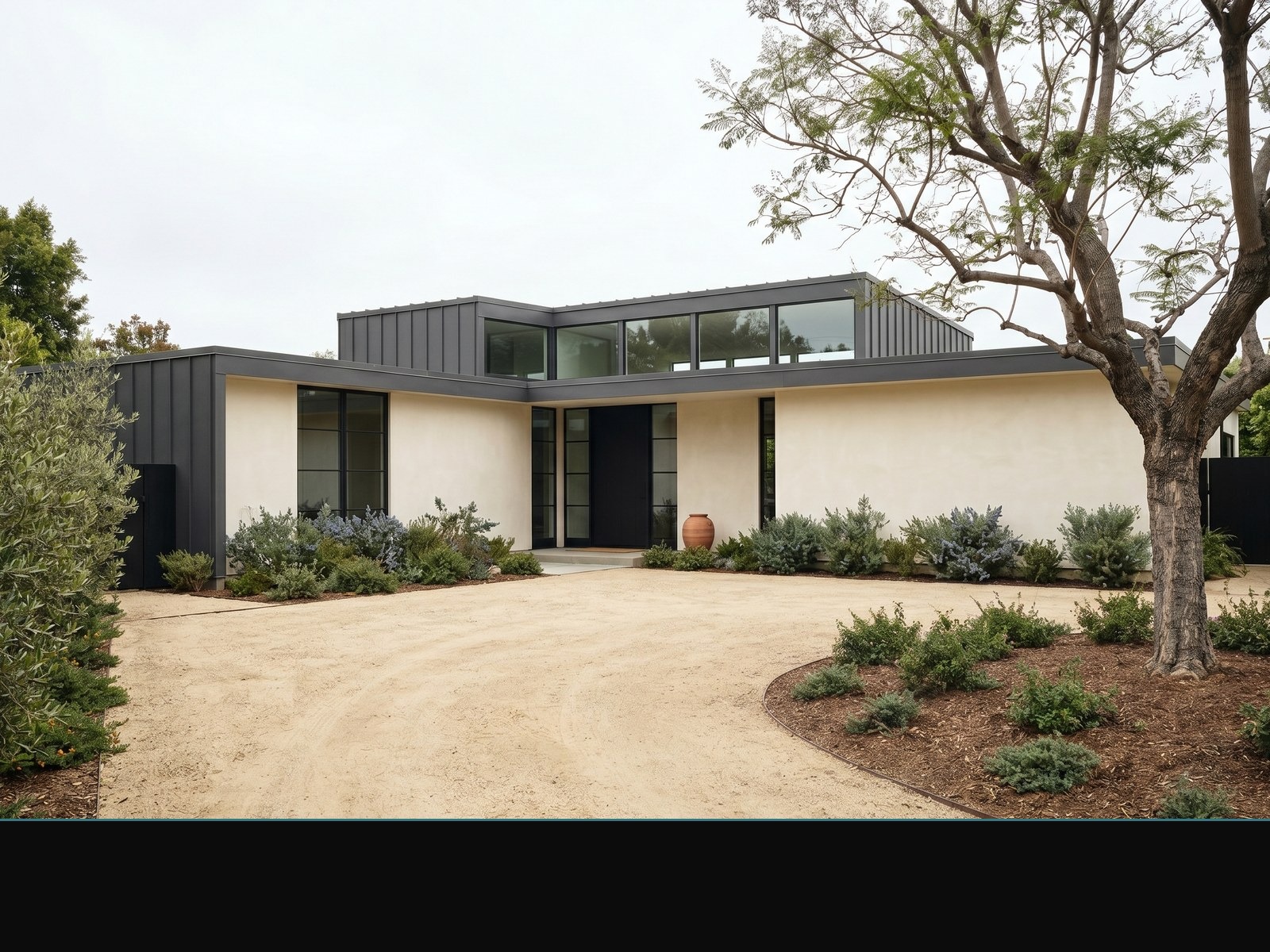
A permitted Accessory Dwelling Unit in Los Angeles in 2026 typically costs $200,000 to $450,000 fully built, takes 18 to 26 weeks of construction, and clears local permit review in 4 to 6 months under the ADU bylaw fast-track. The financial case is concrete: 5–8% gross rental yield on cost, and a documented 30–40% lift in primary-home resale value depending on neighborhood. We Do Construction — a Los Angeles design-build firm licensed in California (CSLB #1096552) and listed in the Architectural Digest PRO Directory — builds detached new ADUs, garage conversions, and SB-9 lot splits across the city. The Lemoyne Street ADU, a recent 720-square-foot detached build in Silver Lake, is a working illustration of how lot, setback, and structural decisions drive both cost and timeline on an LA ADU project.
Project
Lemoyne Street ADU
Neighborhood
Silver Lake · single-family R1 lot
Type
Detached new construction · 720 sf
Permit
LA ADU bylaw · ministerial
Build Cost
$385K all-in
Delivery
Design-build · WDC
Luxury LA ADU
Construction
Permit Track
Lift
What an ADU actually costs in Los Angeles, 2026
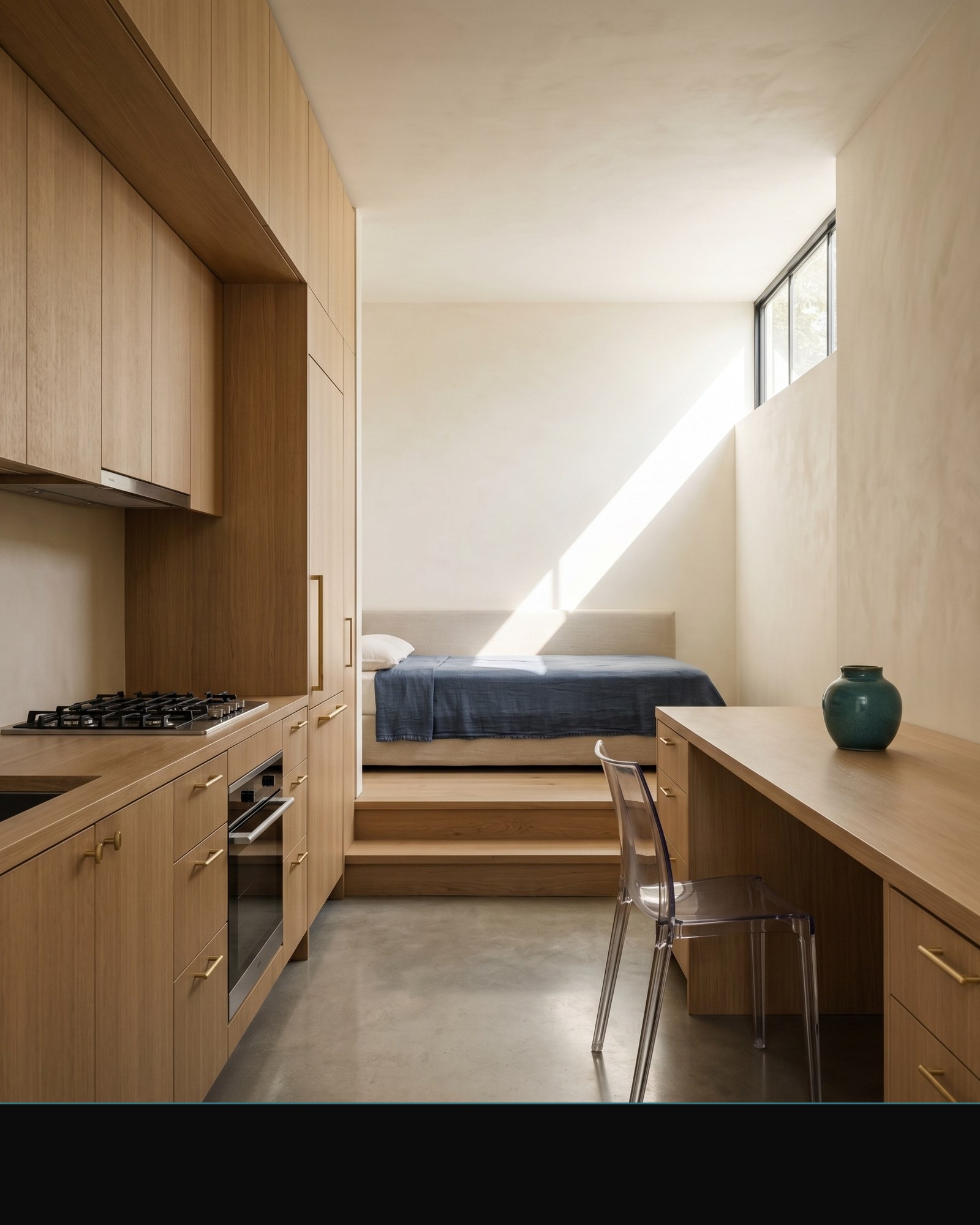
Four ADU categories with distinct cost profiles dominate the LA market:
Permitting in LA: bylaw, SB-9, and the fast-track
Three permitting paths cover most of the LA ADU market. The choice is set by lot size, zoning, and program:
- LA ADU bylaw (ministerial). Detached ADUs up to 1,200 sf on a single-family lot receive ministerial approval — no discretionary review, no public hearing. Typical timeline: 4–6 months from plan submittal to issued permit.
- SB-9 lot split + ADU. California’s 2022 SB-9 allows splitting a single-family lot into two parcels and building an ADU on each. Eligibility is narrower than most homeowners assume. Timeline: 6–10 months total because civil engineering and survey add a layer.
- Junior ADU (JADU). Up to 500 sf inside the primary residence, sharing the kitchen with the main house. Permit timeline: 8–12 weeks. Used most often for in-laws or rentals to a known tenant.
The ministerial bylaw is the most underused asset in Los Angeles residential. A detached 800 sf ADU clears permit in four to six months, no hearings, no neighbor objection. The path is open. The lot has to be eligible. Most R1 lots are.— Jacob Bachar, WDC
Construction types and what each actually buys you
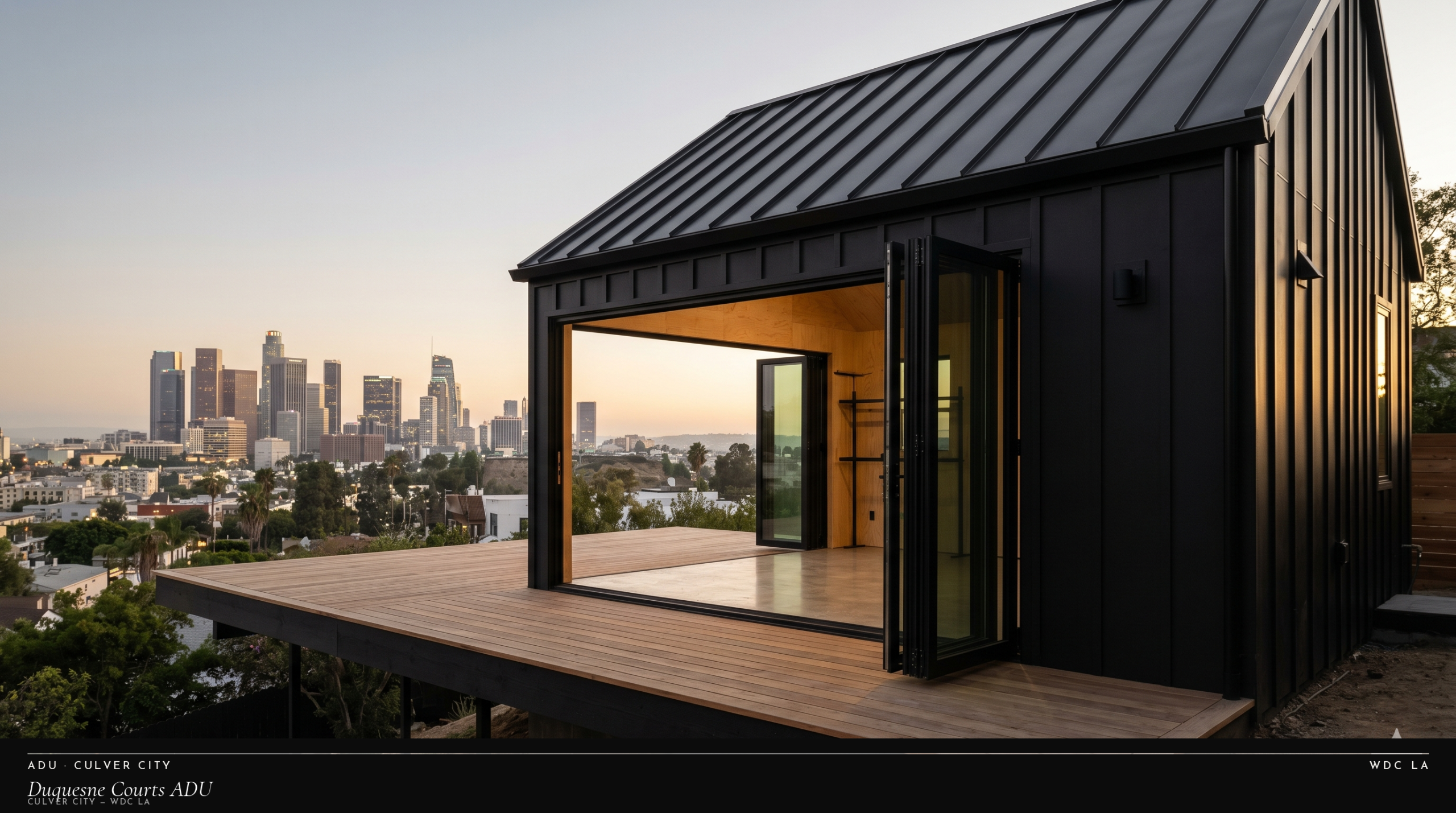
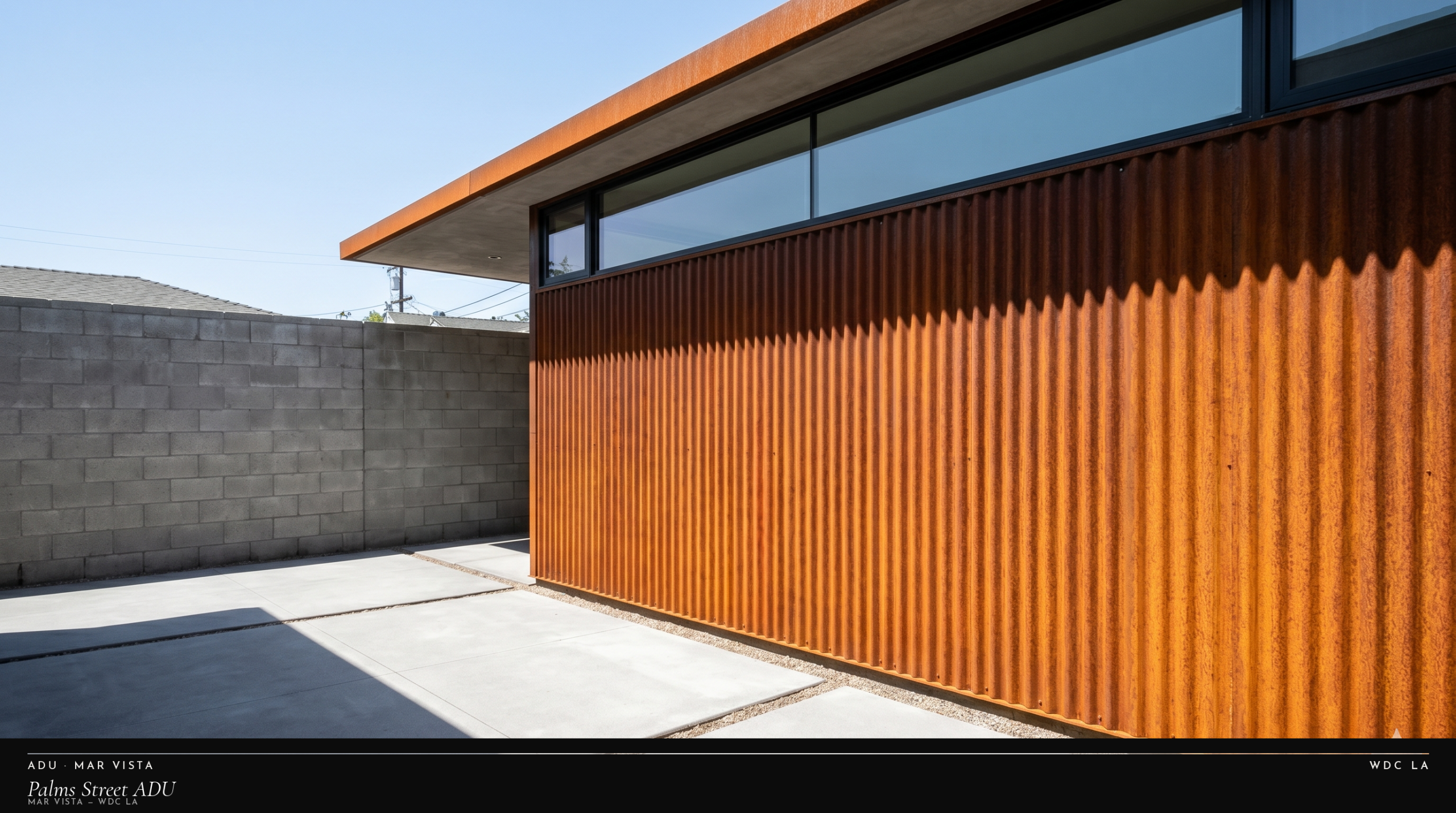
Three construction approaches map to the three primary use cases:
- Stick-built on slab — the default for detached new ADUs at this budget tier. Highest material quality, full design flexibility, integrates with neighborhood architectural context. Construction window: 18–26 weeks.
- Garage conversion — existing structure, new envelope. Cost-efficient, but the existing slab and wall plates set the geometry. Construction window: 10–16 weeks.
- Prefab / modular — set on slab in a single day. Predictable, but limited to a small set of plan and finish options. Best for clients prioritizing speed over customization. Construction window: 6–10 weeks after site prep.
For luxury homeowners building an ADU to function as a guest house, home office, or long-term-rental income unit, stick-built is the right call. The cost premium over prefab is in the 15–25% range — paid back in resale value and design flexibility.
The financial case: rent roll vs resale lift
Two return streams justify the build:
- Rental yield: A well-designed 800 sf ADU in a desirable LA neighborhood (Silver Lake, Mar Vista, Sherman Oaks, Eagle Rock) rents $3,400–$5,200/month furnished or $2,800–$4,200 unfurnished in 2026. On a $325K all-in cost, that is 10–19% gross yield, 5–8% net after vacancy and operating expense.
- Resale lift: Recent LA market data attributes 30–40% home-value lift to a permitted, architecturally consistent ADU on the same lot. On a $2M primary home, that is $600K–$800K of incremental resale value against $325K construction cost.
The numbers favor build-to-rent. The numbers favor build-to-sell. The numbers rarely favor not building.— On the LA ADU return profile
Timeline, end to end
- Site analysis + programming: 2–3 weeks
- Design + selections: 6–10 weeks
- Permitting (LA ADU bylaw): 4–6 months, runs in parallel with finalizing CDs
- Construction (detached new): 18–26 weeks
- Punch + Certificate of Occupancy: 1–2 weeks
- Total from kickoff to occupancy: 38 to 52 weeks for a detached new ADU.
What the numbers actually look like
Why design-build on an ADU
ADU projects are particularly unforgiving to the architect-led-then-bid sequence. The lot constraints (setbacks, separation, utility runs) drive the design more than any other variable, and the constraints are not visible in plan until a builder walks the lot. Architects working without site-level builder input frequently produce schemes that fail to meet setback or trigger a discretionary review path the homeowner did not budget for.
Design-build ADU construction collapses that risk. The first deliverable is a feasibility memo — based on a real site walk, with real survey input — that confirms what can actually be built where, before any design fee is committed.
Frequently asked questions
How much does a permitted ADU cost in Los Angeles?
How long does ADU permitting take in LA?
What is the LA ADU bylaw?
What is the rental yield on an LA luxury ADU?
Does an ADU increase home value?
Related Projects
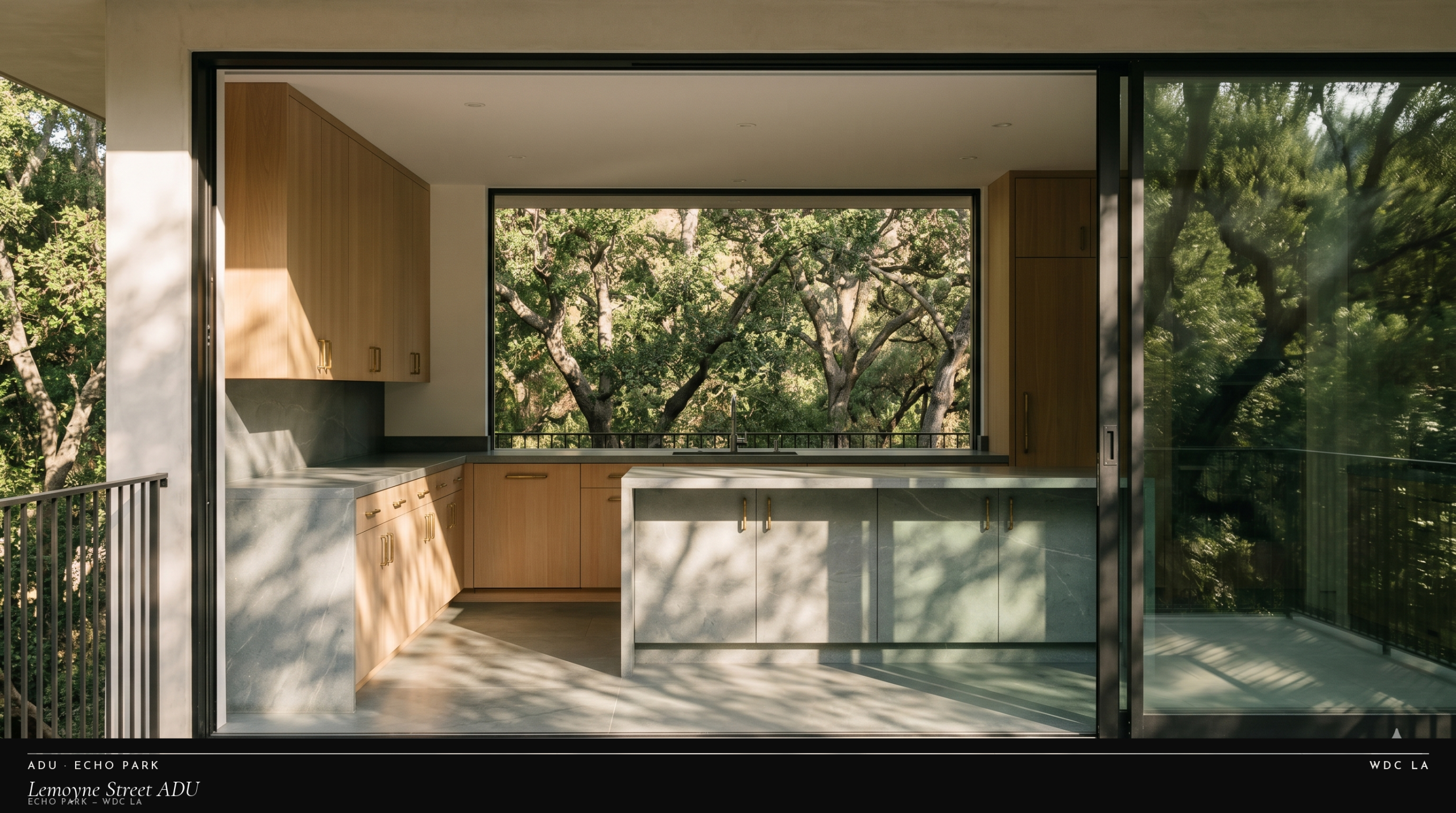
Lemoyne Street ADU
Duquesne Courts ADU
Palms Street ADU
How many ADUs is Los Angeles actually building?
The ADU is no longer a niche product in Los Angeles — it is a material share of the housing the region delivers. LADBS issued 6,626 ADU permits in 2024, the second-highest annual figure on record for the city. Across Los Angeles County, USC Lusk Center counted 10,230 ADUs certified for occupancy in 2025, up from 1,624 in 2018, and 37% of all new housing certified that year — the highest share in eight years of data. They also clear faster than anything else being built: roughly 18 months from permit issuance to completion, against about three years for buildings of five units or more. On value, the defensible number is narrower than the ones usually quoted. A peer-reviewed study in Real Estate Economics found an ADU raises parcel assessed value and selling price by 7–9% — a causal estimate for Los Angeles, not a raw comparison between different properties.
Two procedural facts change how an ADU should be run. A complete application must be approved or denied within 60 days or it is deemed approved by operation of law, under Government Code §66317(a) — the HCD ADU Handbook sets this out, and note that state ADU law was renumbered to §§66310–66342, so older citations to §65852.2 are dead. And LADBS now publishes more than 70 pre-approved standard ADU plans, including a city-owned 455 sq ft plan offered free of charge, which removes design review time from the critical path where a standard plan fits the lot.
Figures: City permit count via Crosstown LA analysis of LADBS data. County completions, share of new housing and time-to-completion: USC Lusk Center. Value effect: Brueckner & Thomaz, Real Estate Economics 52(3), 2024. Statutory deadlines: California HCD ADU Handbook, March 2026. WDC construction costs are drawn from our own completed projects — no credible published cost study exists for Los Angeles ADUs.